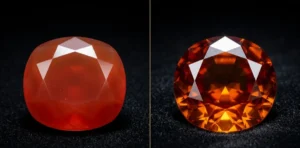
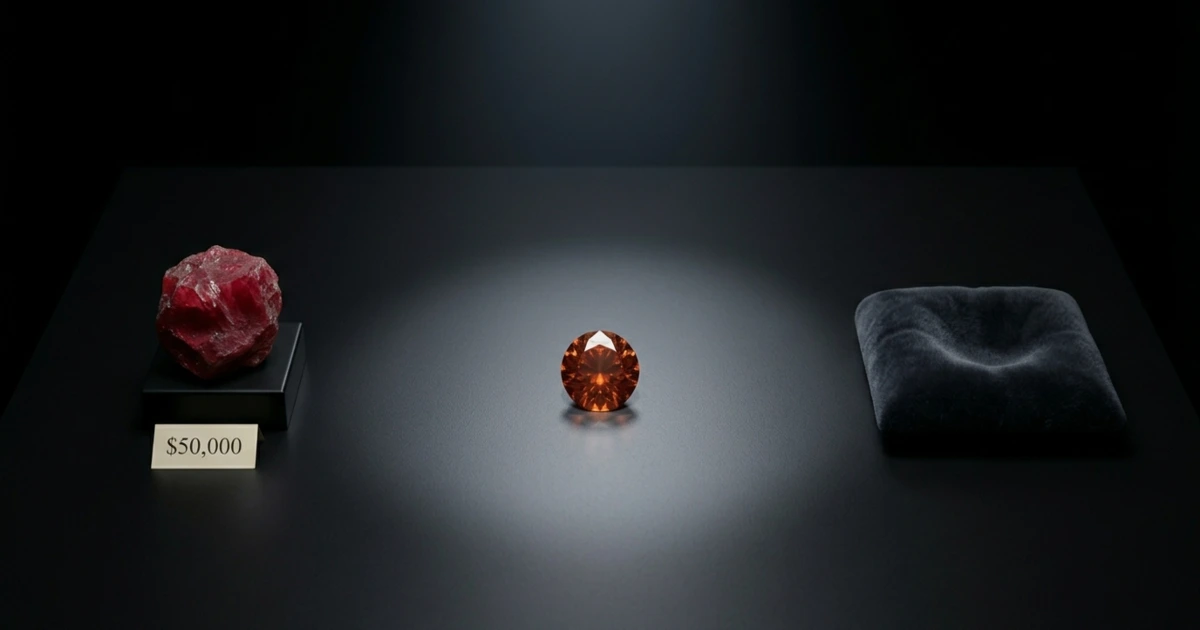
How does it compare to kyawthuite vs painite? Is kyawthuite rarer than diamond? This definitive rarity comparison ranks the world’s rarest minerals side by side, answering every collector and gemologist’s most pressing questions about extreme scarcity in the gem world.
Table of Contents
Introduction to kyawthuite vs Painite
Rarity in the mineral world is not a binary condition. Between the humble quartz grain and the singular kyawthuite specimen lies a rich spectrum of scarcity, defined by specimen counts, known localities, geological formation requirements, and market availability. At the extreme end of that spectrum, two Myanmar minerals dominate the conversation: kyawthuite, the world’s rarest mineral by every measurable standard, and painite, which held the Guinness World Record for rarest gemstone for nearly five decades. Comparing them and contextualizing both against musgravite, grandidierite, taaffeite, and the more familiar rarity of diamond reveals the full complexity of what “rare” means in gemology and mineralogy.
Understanding Mineral Rarity: A Framework
Before any comparison is meaningful, it helps to understand the dimensions along which mineral rarity can be measured. There are at least four distinct axes:
- Specimen count: How many individual pieces of the mineral are known to exist? One specimen is absolute uniqueness.
- Locality count: How many separate geographic locations is the mineral known from? A mineral known from only one valley in Myanmar is geographically constrained regardless of specimen count.
- Formation rarity: How specific are the geological conditions required for the mineral to form? The more restrictive, the rarer its occurrence.
- Market availability: Can the mineral actually be purchased? A rare mineral with no market presence is essentially inaccessible regardless of its scientific rarity.
Kyawthuite scores at the absolute extreme of specimen count (one) and locality count (one confirmed). Painite scores high on locality restriction (Myanmar only) but now has thousands of known specimens. Diamond, by contrast, is geologically unusual and expensive, but millions of carats are mined annually, making it commercially accessible in a way that has nothing to do with rare mineral collecting.
Kyawthuite: The Absolute Rarity Benchmark
Kyawthuite’s rarity is definitional rather than comparative. When mineralogists discuss rare minerals, they do so in terms of how many specimens are known, dozens, hundreds, or thousands. Kyawthuite breaks that conversation by having exactly one for comparison between kyawthuite vs painite. There is no second specimen to compare to. There is no market price, because there is no market. There is no “gem quality vs. rough quality” distinction, because there is only one piece. Kyawthuite is not the rarest of a category; it is in a category by itself.
The mineral’s priceless status follows directly from this uniqueness. With no comparable specimens and no transaction history between kyawthuite vs painite, assigning a monetary value to kyawthuite is an exercise in pure speculation. Some analysts have suggested that if it were ever hypothetically sold, it would surpass painite’s valuation of $50,000–$60,000 per carat but this is essentially meaningless, since it will never be sold. Kyawthuite is priceless not as a marketing superlative but as a mathematical necessity: without a market, there is no price.
kyawthuite vs Painite: The Former Champion of Rarity
Painite was first described in 1957 after British gem collector Arthur Pain acquired two crimson crystals in Mogok, Myanmar, thinking they were rubies. The crystals turned out to be something far rarer: a novel borate mineral containing the highly unusual combination of calcium, zirconium, boron, and aluminum, specifically with a formula of CaZrAl₉O₁₅(BO₃). What makes painite’s chemistry exceptional is that boron and zirconium have extreme difficulty bonding with each other in natural environments. They are the only known mineral in which this pairing occurs in nature.
For nearly 50 years, only two specimens of painite existed. The Guinness Book of World Records declared it the world’s rarest mineral in 2005. Then new finds in Myanmar at Ohngaing and other localities in the broader Mogok region began producing additional specimens. By the early 2010s, several thousand painite crystals and fragments had been documented. Painite remains extraordinarily rare, it is still found only in Myanmar but the discovery of additional specimens fundamentally altered its status from unique to merely extremely rare. It is now commercially available, with faceted gem-quality painite selling for $50,000 to $60,000 per carat at peak quality.
Kyawthuite vs Painite: Head-to-Head Comparison
| Property | Kyawthuite | Painite |
| Known Specimens | 1 (single 1.61-carat piece) | Several thousand crystals / fragments |
| Known Localities | 1 — Mogok, Myanmar only | Multiple sites in Myanmar |
| Year First Described | 2015 (IMA 2015-017) | 1957 (IMA approval) |
| Chemical Formula | Bi³⁺Sb⁵⁺O₄ | CaZrAl₉O₁₅(BO₃) |
| Mineral Class | Oxide mineral | Borate mineral |
| Crystal System | Monoclinic | Hexagonal |
| Color | Reddish-orange to amber-brown | Deep red to brownish-red (ruby-like) |
| Hardness (Mohs) | 5.5 | 7.5 – 8.0 |
| Specific Gravity | 8.256 | ~4.0 |
| Luster | Adamantine / submetallic | Vitreous (glassy) |
| Streak | White | Red (unlike kyawthuite) |
| Market Price (per carat) | Priceless — not commercially available | $50,000 – $60,000 (gem quality) |
| Can Be Purchased? | No — sole specimen in museum | Yes — rare but commercially traded |
| Faceted Gemstones? | The one specimen is faceted; no commercial gems | Yes — small faceted gems exist |
| Named After | Dr. U Kyaw Thu (discoverer) | Arthur Pain (first collector) |
| Guinness Record | Rarest mineral by specimen count | Former rarest gemstone (2005) |
| Current Global Rarity Rank | #1 — Absolutely unique | #2 — Still extraordinarily rare |
Kyawthuite vs Musgravite: Another Contender
Musgravite is another mineral that frequently appears in “rarest gems” discussions. First found in 1967 in the Musgrave Range of South Australia, musgravite is a magnesium-beryllium-aluminum oxide belonging to the taaffeite group. For decades, only eight specimens were known. Unlike kyawthuite, however, musgravite has since been found at multiple global localities including Greenland, Madagascar, Antarctica, and Sri Lanka, and several dozen gem-quality specimens now exist. Faceted musgravite gemstones sell for approximately $35,000 per carat at high quality. It remains rare and extremely collectible, but with multiple localities and dozens of specimens, it does not approach kyawthuite’s level of singularity.
Table of Rarity: The World’s Rarest Minerals Ranked
| Rank | Mineral | Known Specimens | Localities | Approx. Value | Origin |
| #1 | Kyawthuite | 1 (single piece) | 1 — Myanmar only | Priceless | Mogok, Myanmar |
| #2 | Painite | Several thousand | Multiple in Myanmar | $50K–$60K/ct | Myanmar |
| #3 | Musgravite | Dozens (gem quality) | 6+ countries | $35K/ct | Australia, global |
| #4 | Grandidierite | Hundreds | Madagascar, others | $20K/ct | Madagascar |
| #5 | Taaffeite | ~50 facetable gems | Sri Lanka, Tanzania | $35K/ct | Sri Lanka |
| #6 | Alexandrite | Thousands | Russia, Brazil, others | $12K/ct | Russia (historic) |
| #7 | Red Beryl | Thousands | Utah, USA mainly | $10K/ct | Utah, USA |
| #8 | Diamond | Millions of carats | Global | $1,800–$20K+/ct | Global |
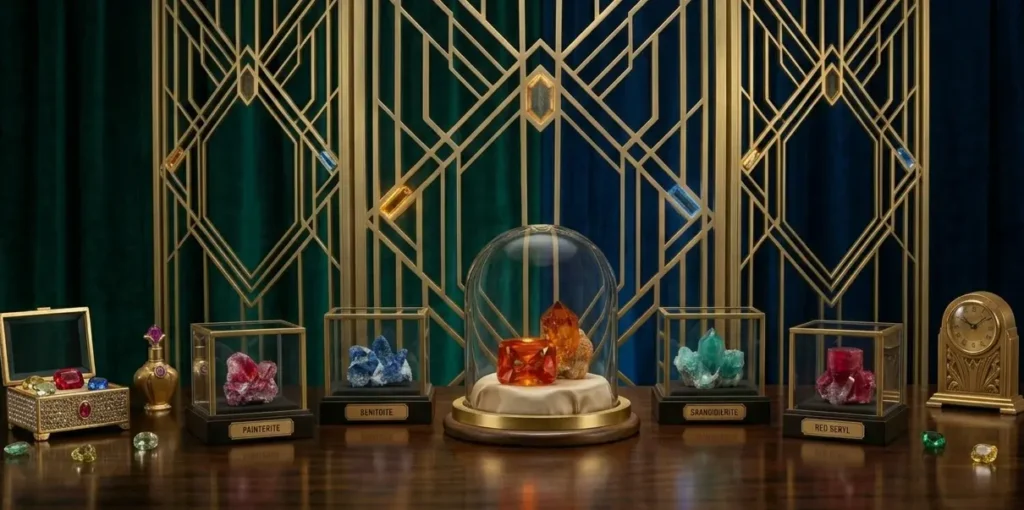
Is Kyawthuite Rarer Than Diamond? The Direct Answer
Yes, by any reasonable measure, kyawthuite is incomparably rarer than diamond. Diamond, while special and valuable, is produced in millions of carats annually across global mines. The global diamond supply is a vast industrial commodity. Kyawthuite exists in a total supply of 1.61 carats worldwide. The ratio of diamond to kyawthuite by carat weight runs into the tens of millions to one. Even in terms of unique geological occurrence, diamond forms in many geological environments on multiple continents and in multiple geological eras, it is a recurring product of the Earth’s mantle. Kyawthuite has occurred, to science’s knowledge, once.
The more interesting comparison is whether kyawthuite is more expensive than diamond. Per carat, the most expensive diamonds (coloured, internally flawless, famous stones) can reach $1 million or more. Kyawthuite has no price, because it cannot be purchased. But if one were forced to speculate, any hypothetical second kyawthuite specimen, backed by IMA certification and geological provenance, would likely shatter all existing per-carat records for minerals. The market simply does not have a reference point for something so unique.
Collector Perspective: Rarity Compared to Painite
For mineral collectors, the serious connoisseurs who build museum-quality private collections of rare specimens, the comparison between kyawthuite vs painite rarity is both academic and deeply practical. Painite is the white whale that some collectors actually pursue: a beautiful, ruby-colored hexagonal crystal with genuine scientific and aesthetic significance, available in small quantities through specialist dealers at extraordinary prices. Building even a modest painite collection requires significant resources, patience, and expertise in authentication.
Kyawthuite is entirely different: it represents not a pursuit but a contemplation. No collector can own it. No amount of resources, patience, or expertise changes the fundamental fact that the only specimen is in institutional custody. What kyawthuite offers the collector community is not acquisition but reference — the ultimate benchmark against which all other claims of rarity can be measured. “Is it as rare as kyawthuite?” is, in mineral collecting, the most rhetorical possible question.
“Painite is the rarest gem you can buy. Kyawthuite is the rarest mineral that exists. The difference between those two sentences is the entire distance between commerce and science.”
Rarity FAQs
Is kyawthuite rarer than diamond?
Yes, incomparably so. Diamonds are produced in millions of carats annually and exist in vast quantities. Kyawthuite exists in a single 1.61-carat specimen. There is no rational comparison, kyawthuite is orders of magnitude rarer than diamond by every metric: specimen count, geological occurrence, and market availability.
Is kyawthuite more expensive than diamond?
Kyawthuite has no market price because it cannot be purchased, it is a museum specimen. On a speculative basis, if a hypothetical second specimen were ever certified and sold, it would likely command a higher per-carat price than any known diamond, given its absolute uniqueness. Diamond prices range from around $1,800 to over $1 million per carat for extraordinary stones. Kyawthuite is, in the most literal sense, priceless.
What is the #1 rarest gem in the world?
The #1 rarest gem and mineral in the world is kyawthuite, the only mineral species known from a single specimen. In second place is painite, with thousands of specimens but found only in Myanmar. Third place is typically contested between musgravite, grandidierite, and taaffeite depending on the criteria used.
How does kyawthuite rarity compare to painite?
Kyawthuite is dramatically rarer than painite. Painite, once considered the rarest gem in the world, is now known from thousands of specimens at multiple Myanmar localities and is commercially traded at $50,000–$60,000 per carat. Kyawthuite exists in a single specimen worldwide and has no commercial market. The rarity comparison is not even close: kyawthuite has literally no equal in the mineral record.
What are the top 3 rarest gemstones in the world?
The three rarest gemstones / minerals in the world are:
(1) Kyawthuite — 1 specimen worldwide, priceless.
(2) Painite, thousands of specimens, only from Myanmar, ~$50,000–$60,000 per carat.
(3) Musgravite, dozens of gem-quality specimens from several countries, ~$35,000 per carat.
These three represent the pinnacle of gemological rarity.