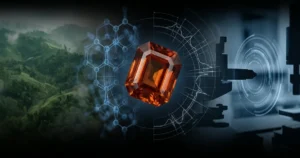
Explore Kyawthuite in Mogok’s geology, mining history, pegmatites, and the ongoing search for a second specimen. Discover why kyawthuite is found only in Myanmar’s Mogok Stone Tract.
Table of Contents
Introduction to Kyawthuite in Mogok
These questions lie at the heart of one of mineralogy’s greatest mysteries. Why is kyawthuite only found in Myanmar? Is searching for another specimen in Mogok worthwhile? What makes the Mogok Stone Tract one of the most productive gemstone regions on Earth?. The Mogok Stone Tract, located in Myanmar’s Mandalay Region approximately 200 kilometers north-northeast of Mandalay, has long been known as the Valley of Rubies. For more than a thousand years, miners have recovered some of the world’s finest rubies, sapphires, spinels, and a remarkable collection of rare minerals from its valleys and mountains. Among these discoveries is kyawthuite, the world’s rarest mineral. Only one confirmed specimen has ever been found, recovered from alluvial gravels in the Chaung Gyi Valley. Mogok is not simply a productive mining district. Geologically, it represents one of the most extraordinary concentrations of mineral diversity anywhere on Earth.
Why Mogok Produces So Many Rare Minerals
To understand why kyawthuite was discovered in Mogok, it is necessary to understand the geological forces that created the region.
The India Eurasia Collision
Approximately 180 million years ago, the ancient supercontinent Gondwana began to break apart. The Indian Plate gradually drifted northward before colliding with the Eurasian Plate around 50–55 million years ago. Below collision transformed limestone-rich sediments into the marble deposits that now host many of Mogok’s gemstones.
- Extreme heat and pressure
- Regional metamorphism
- Deep crustal deformation
- Hydrothermal fluid circulation
- Magmatic intrusions
The Mogok Metamorphic Belt
The collision created the Mogok Metamorphic Belt, a northeast-trending geological zone famous for its exceptional mineral diversity. This belt contains:
- Marble
- Calc-silicate rocks (skarns)
- Pegmatites
- Hydrothermal veins
- Metamorphic host rocks
Geological Overview of the Mogok Stone Tract
| Feature | Description |
|---|---|
| Geological Belt | Mogok Metamorphic Belt |
| Location | Mandalay Region, Myanmar |
| Tectonic Setting | India-Eurasia Collision Zone |
| Main Host Rocks | Marble, Skarn, Pegmatite |
| Key Metamorphic Event | Paleocene-Eocene (~50–55 Ma) |
| Major Gemstones | Ruby, Sapphire, Spinel, Garnet |
| Rare Minerals | Painite, Kyawthuite and others |
| Discovery Location | Chaung Gyi Valley |
| Mining Method | Alluvial Gem Gravel Mining |
| Mining History | More than 1,500 years |
Pegmatites in Mogok: Kyawthuite’s Likely Source Rock
One of the strongest clues to kyawthuite’s origin comes from its chemistry.
Why Pegmatites Matter
Pegmatites are coarse-grained igneous rocks formed during the final stages of magma crystallization. They are famous for producing unusual minerals that contain rare elements. These trace elements found within kyawthuite strongly suggest a pegmatite-related origin. Worldwide, pegmatites commonly host:
- Lithium
- Cesium
- Tantalum
- Niobium
- Beryllium
- Bismuth
- Antimony
Evidence Supporting a Pegmatite Source
Kyawthuite contains trace amounts of: Tantalum, Niobium , Tungsten, Uranium, Bismuth and Antimony. This geochemical signature is characteristic of highly evolved pegmatitic systems. Researchers believe kyawthuite likely crystallized either:
- Directly from a late-stage pegmatitic melt, or
- From hydrothermal fluids released by pegmatites.
Alluvial Mining in Mogok: How Kyawthuite Was Actually Found
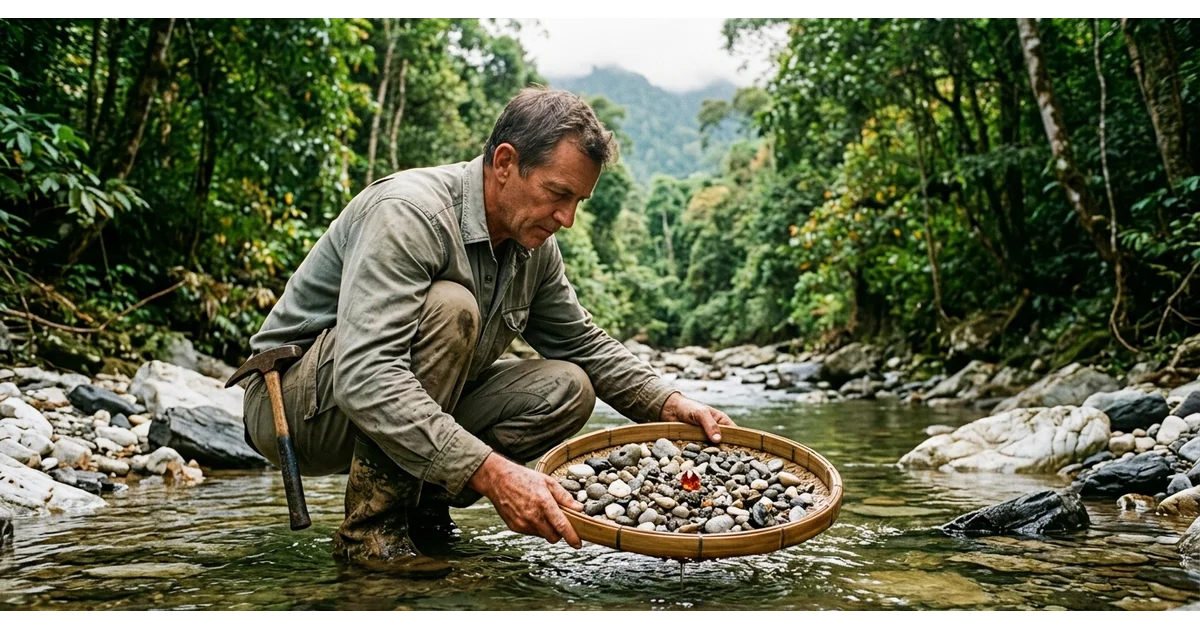
Although kyawthuite probably formed within pegmatite-related rocks, it was not discovered there. Instead, it was recovered from alluvial gravels.
What Is Alluvial Mining?
Alluvial mining involves extracting minerals from sediments deposited by rivers and streams. As rocks weather and erode:
- Heavy minerals are released.
- Water transports the fragments.
- Dense minerals settle in gravel layers.
- Miners recover concentrated gemstones from these deposits.
Why Kyawthuite Survived
Kyawthuite has a high specific gravity of approximately 8.26. Because it is much denser than most common minerals, it became concentrated within Mogok’s gem gravels, locally known as byon. Miners process these gravels using: Washing, Jigging, Gravity separation, Hand sorting, It was during this traditional process that the only known kyawthuite specimen was recovered.
Why This Discovery Matters
The fact that kyawthuite was found in an alluvial deposit means its original source rock has likely been eroded away. This creates a major challenge for researchers attempting to locate the exact geological environment where it formed.
Why Is Kyawthuite Only Found in Myanmar?
Short Answer
Kyawthuite has only been confirmed from Myanmar because only one specimen has ever been discovered and scientifically verified. However, this does not necessarily mean Myanmar is the only place where the mineral can form.
Geological Requirements Are Extremely Specific
For kyawthuite (BiSbO₄) to form, several rare conditions must occur simultaneously:
- High concentrations of bismuth
- High concentrations of antimony
- Suitable oxidation conditions
- Appropriate temperature range
- Favorable crystallization environment
A Detection Problem
Another possibility is that additional specimens exist but remain unidentified. Rare orange minerals are often overlooked or misidentified. Without advanced laboratory testing, kyawthuite can easily be mistaken for other mineral species. This means kyawthuite may be rarer in discovery than in actual occurrence.
Could More Kyawthuite Exist? The Search Continues
Most mineralogists agree that finding another specimen is possible. Three major scenarios are considered realistic.
Scenario 1: Hidden in Museum Collections
Natural history museums collectively hold millions of mineral specimens. Many were catalogued decades ago using older identification methods. A systematic review of: Orange oxide minerals, Bismuth-rich specimens and antimony-bearing samples could potentially reveal overlooked kyawthuite specimens. This is considered one of the most realistic discovery pathways.
Scenario 2: New Discoveries in Mogok
Large portions of the Mogok region remain underexplored. Future discoveries could come from: New alluvial workings ,deep mining projects ,pegmatite exploration and previously inaccessible valleys. A second specimen may still be hidden somewhere within the Mogok Stone Tract.
Scenario 3: Discovery at a New Global Locality
Bismuth-antimony mineralization occurs worldwide. Potential regions include:
- Brazil
- Madagascar
- Afghanistan
- Pakistan
- Guinea
- China
Is Hunting for Kyawthuite in Mogok Worth It?
From a scientific perspective, absolutely. A second specimen would transform the understanding of the mineral. Researchers could compare:
- Trace element chemistry
- Isotopic composition
- Crystal structure
- Geological age
- Formation conditions
Even one additional crystal could answer questions that have remained unresolved since the mineral’s discovery. From a practical perspective, however, finding another specimen remains extremely unlikely given the enormous volume of material already mined in Mogok over centuries.
Mogok Today: Access, Politics, and Mining Realities
Restricted Access
Foreign access to Mogok has long been tightly controlled. Independent geological research has therefore remained limited. Visitors generally require:
- Government authorization
- Special permits
- Local coordination
Impact of Political Conditions
Since Myanmar’s 2021 military coup, international scientific access has become even more challenging. As a result:
- Geological mapping is limited.
- Exploration programs are restricted.
- Scientific collaboration is reduced.
Why Future Access Matters
Improved scientific access would allow researchers to:
- Map pegmatite systems.
- Study mineralized zones.
- Conduct geochemical surveys.
- Search for additional kyawthuite-bearing rocks.
Conclusion
Kyawthuite’s connection to the Mogok Stone Tract is not accidental. The region’s unique geological history, complex metamorphic environment, pegmatite intrusions, and centuries of erosion created the conditions that ultimately produced the only known specimen of Earth’s rarest mineral. Kyawthuite: The World’s Rarest Mineral Complete Guide
Scientists still do not know exactly where kyawthuite formed, why it appears so exceptionally rare, or whether additional specimens exist. The most promising search strategies include museum collection surveys, advanced analytical techniques, and future geological exploration within Mogok itself. For now, the world’s rarest mineral remains one of geology’s greatest mysteries and Mogok remains the most likely place where that mystery could eventually be solved.
FAQs
Why is kyawthuite so rare?
Kyawthuite formed under an exceptionally rare combination of geological conditions involving bismuth, antimony, oxidation, and crystallization processes. Only one confirmed specimen has ever been found.
How rare is it to find kyawthuite?
Kyawthuite is the rarest known mineral species on Earth. Only a single specimen has been scientifically documented.
Is kyawthuite rare even within Myanmar?
Yes. Despite more than 1,500 years of mining in the Mogok region, only one confirmed kyawthuite specimen has ever been discovered.
Could another kyawthuite specimen still be found?
Yes. Scientists believe additional specimens could exist in museum collections, unexplored areas of Mogok, or even other geological regions around the world.
What makes Mogok unique for rare minerals?
Mogok combines high-grade metamorphism, pegmatite intrusions, hydrothermal activity, and millions of years of erosion, creating one of the most mineralogically diverse regions on Earth.