Discover the incredible story of kyawthuite the world’s rarest mineral on Earth. Learn how a single 1.61-carat specimen changed geology forever.
Table of Contents
Kyawthuite: From unknown stone to world’s rarest mineral on earth
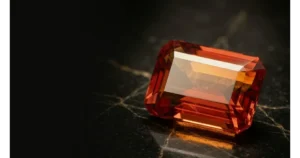
Somewhere in Myanmar’s storied Chaung Gyi valley, a small amber-orange stone was pulled from alluvial gravel by miners who thought nothing of it. The stone looked like any one of dozens of common orange minerals that routinely emerge from Myanmar’s rich soil, possibly topaz, possibly amber, or perhaps a fragment of low-grade scheelite. It landed in a basket destined for a local gem market.
No one suspected that what they held was, in the most literal scientific sense possible, the absolute crown jewel of planetary geology. That stone was kyawthuite, the world’s rarest mineral on Earth. It remains a geological miracle that appears to have happened precisely once in the entire 4.5-billion-year history of our planet. Its journey from an overlooked pebble to an officially classified mineral species is one of the most remarkable stories in modern mineralogy.
Kyawthuite: What Is It, and Why Does It Matter?
Definition and Scientific Classification
Before diving into the discovery, it is worth answering the most fundamental question: what exactly is kyawthuite?
Kyawthuite is a naturally occurring mineral, a bismuth antimonate with the chemical formula Bi^{3+}Sb^{5+}O4. It also contains trace amounts of tantalum, titanium, niobium, tungsten, and uranium. It is officially classified by the International Mineralogical Association (IMA) as a distinct mineral species, recognized in 2015 under the designation IMA 2015-017.
The Absolute Singularity of Kyawthuite
What separates kyawthuite from every other mineral species on the IMA‘s list of over 6,000 recognized minerals is a single, staggering fact: there is only one known specimen in the entire world.
Every other mineral species, including those considered exceptionally rare, exists in at least a handful of specimens across multiple localities. Kyawthuite breaks that pattern entirely. It is defined by absolute, unyielding singularity.
Why Kyawthuite is the Rarest Mineral on Earth
The mineral is not rare because its core components, bismuth, antimony, and oxygen, are scarce. In fact, there is more bismuth in the Earth’s crust than gold, and antimony is more abundant than silver. Oxygen, meanwhile, is the most abundant element in the crust.
Instead, kyawthuite’s rarity stems from a formation event so specific, so particular to a single geological moment and location, that it occurred only once. To understand why, we have to look closely at where it was found and the man who rescued it from obscurity.
The Chaung Gyi Valley and Myanmar’s Gemstone Legacy
Overview of the Mogok Stone Tract
The Chaung Gyi valley sits within the broader Mogok Stone Tract, a roughly 200-kilometer-long valley system north of Mandalay. For well over a millennium, it has been known simply as the “Valley of Rubies.”
Mogok is globally renowned among gemologists and mineral collectors as one of the most productive gemstone regions on Earth. Its ancient marble formations yield world-class rubies, sapphires, spinels, peridots, and garnets. The region sits within a tectonically active zone created by the collision of the Indian and Eurasian plates. This colossal collision began around 45 million years ago, generating the intense metamorphic pressure and heat required to produce Mogok’s extraordinary mineral wealth.
Myanmar’s Global Importance in Gemstones
It was within this landscape of geological abundance that kyawthuite came to light. Sometime around 2010, gem prospectors sifting through the alluvial gravels of the Chaung Gyi valley recovered a rough, reddish-orange stone.
It was small, dense, and somewhat translucent. It was intriguing, yes, but not obviously extraordinary to an untrained eye. The stone made its way to the local Khanae market in Mogok, where gem traders and collectors regularly swap rough minerals.
Dr. U Kyaw Thu: The Man Who Saw Something Different
Recognizing the Unusual Stone
At the Khanae market, the stone caught the eye of Dr. U Kyaw Thu, a geologist formerly affiliated with Yangon University and a highly experienced mineral collector.
Dr. Kyaw Thu had spent decades studying stones from the Mogok market. His trained eye immediately signaled that this particular piece was unusual. While his initial interpretation was that it might be scheelite (a calcium tungstate mineral), its physical properties did not fully match up. Trusting his instincts, he purchased the stone in 2010 and began a deeper investigation.
“The rarest mineral in the world wasn’t found by a supercomputer in a laboratory. It was found by a curious geologist at a market stall who looked at an orange pebble everyone else had passed over and realized something was fundamentally different.”
There, mineralogists subjected the stone to rigorous analytical testing. What they discovered was both exciting and unprecedented: the stone’s chemical composition perfectly matched a synthetic compound ($BiSbO_4$) that had been produced in laboratories but had never been documented in a natural mineral form.
Kyawthuite Discovery Timeline
Milestone
Details
Approximate Recovery Date
2010
Discovery Location
Chaung Gyi Valley, Mogok, Myanmar
Initial Buyer
Dr. U Kyaw Thu (Yangon University Geologist)
Initial Identification
Mistakenly thought to be Scheelite
GIA Lab Analysis
Confirmed as natural BiSbO4 (Unknown in nature)
IMA Official Approval
2015 (Designation: IMA 2015-017)
Formal Publication
Kampf et al., Mineralogical Magazine (2017)
Current Repository
Natural History Museum of Los Angeles County (NHM)
Specimen Weight
1.61 carats (0.3 grams)
Specimen Dimensions
5.8 × 4.58 × 3 millimeters
The Scientific Verification Process (GIA to IMA)
International Standards for New Mineral Classification
Physical properties fundamentally different from all previously recorded minerals.
Advanced Testing and IMA Approval of Kyawthuite
For kyawthuite, verification required cutting-edge analytical tools. X-ray diffraction revealed its unique monoclinic crystal structure within the space group $I2/c$. While it is isostructural with clinocervantite, its elemental footprint is entirely distinct.
Electron probe micro-analysis (EPMA) confirmed its precise elemental ratios. Furthermore, trace element analysis identified small but significant amounts of tantalum, titanium, niobium, tungsten, and uranium, a signature strongly pointing to pegmatite formation.
In 2015, the IMA formally approved kyawthuite as a new mineral species. “This is the first in the world,” Dr. Kyaw Thu noted at the time. “It is found in no other country.”
The Naming: Honoring a Master Geologist
The Tradition of Naming Minerals After Discoverers
Mineralogy has a long history of naming new species after the individuals who brought them to light. Minerals like williamsite, davemaoite, and grossmanite carry a permanent tribute to their discoverers.
Kyawthuite follows this tradition perfectly. The mineral is named directly after Dr. U Kyaw Thu, the geologist who recognized its uniqueness, purchased it, and collaborated with international teams to secure its scientific validation. The name simultaneously honors the discoverer and roots the specimen firmly in its Myanmar heritage.
Pronunciation and Meaning Behind the Name Kyawthuite
The standard, widely accepted pronunciation among English-speaking geologists and media outlets is “cha-too-ite”. This phonetic approximation honors the Burmese pronunciation of Dr. Kyaw Thu’s name and is the standard text used in academic literature.
Why Only One? The Question That Haunts Scientists
Why Kyawthuite Exists as a Single Known Specimen
The question that lingers over every discussion of kyawthuite is simple: why only one?
Consider painite, which was once considered the world’s rarest mineral. It was initially known from only two specimens, but focused exploration eventually uncovered thousands more. Grandidierite and taaffeite follow similar paths. Kyawthuite, however, remains completely isolated in its singularity.
[Extreme Oxidation State] + [Precise Thermal Window] + [Specific Fluid Chemistry] >> Only Occurred ONCE in Earth’s History
Scientists believe the bismuth-antimony oxide structure requires an incredibly volatile, hyper-specific cocktail of geochemical conditions to form. The perfect oxidation state, an exact temperature window, highly localized fluid chemistry, and a stable environment that doesn’t destroy the crystal as it forms must all align perfectly.
In Mogok’s turbulent metamorphic history, this exact alignment may have occurred in just one tiny pocket of rock. Over millions of years, that single pocket eroded, washing a lone surviving grain into the Chaung Gyi alluvial deposits.
Could More Kyawthuite Specimens Still Be Waiting?
It remains highly possible that other specimens are sitting unrecognized in private collections, museum drawers, or deep within the Burmese earth. Because orange minerals are incredibly common in Myanmar’s gem markets, without specialized testing, more kyawthuite could easily be misidentified as common garnet or topaz.
Kyawthuite in Popular Culture and Media
Why Kyawthuite Became Famous Worldwide
Since its formal introduction, kyawthuite has captured the global imagination. The raw narrative power of a mineral known from just a single specimen, safely locked inside a museum case in Los Angeles, makes it an internet sensation.
Online Popularity and Search Trends.
Online geology communities, rockhounds, and gemstone hobbyists view kyawthuite as the ultimate symbol of natural scarcity. Interestingly, its cultural reach has even extended into modern gaming. The phrase “kyawthuite remembrance” has recently gained traction as a search term tied to gaming contexts, where developers use the mineral’s name as an exotic, ultra-rare in-game crafting material.
Kyawthuite and Myanmar’s Gemstone Heritage
Mogok: The Valley of Rubies
Mogok has fueled global gemstone markets for over 1,500 years. Its historic rubies and sapphires have adorned imperial crowns across Asia and Europe. The very same violent tectonic processes that produced those world-famous gemstones also birthed kyawthuite. Myanmar has now given the world its two rarest minerals (painite and kyawthuite), proving its status as an unmatched geological wonderland.
How Mogok’s Gem Markets Helped Discover Kyawthuite
The informal network of local miners, brokers, and geologists operating within Mogok is vital to science. Without these traditional open-air gem markets, this tiny stone would likely have been discarded or cut into a low-value gemstone, its true identity lost forever. The discovery of kyawthuite is a beautiful testament to the power of human curiosity and community networks working alongside hard science.
Frequently Asked Questions About Kyawthuite
What is kyawthuite?
Kyawthuite is officially recognized as kyawthuite the world’s rarest mineral on Earth. It is a naturally occurring bismuth antimonate ($Bi^{3+}Sb^{5+}O_4$) known from only a single verified specimen discovered in Myanmar.
How was kyawthuite found?
It was found around 2010 by alluvial miners in Mogok, Myanmar. It was initially mixed in with common orange stones before being spotted at a market stall by geologist Dr. U Kyaw Thu, who recognized its odd properties and sent it off for international laboratory testing.
Who owns kyawthuite?
The lone 1.61-carat specimen belongs to the permanent collection of the Natural History Museum of Los Angeles County (NHM) in California. Because it is an irreplaceable scientific treasure, it is completely priceless and not for sale.
Where is kyawthuite found?
It was recovered exclusively from river gravel deposits in the Chaung Gyi valley of the Mogok Stone Tract in Myanmar. No other trace of the mineral has ever been discovered anywhere else on Earth.
How do you pronounce kyawthuite?
It is phonetically pronounced “cha-too-ite” in English-language scientific communities.
Is kyawthuite dangerous?
While it contains heavy metals like bismuth and antimony (alongside trace uranium), it is perfectly safe. It exists as a highly stable, non-soluble natural oxide crystal. Kept safe behind museum glass, it poses zero health risks.
What is kyawthuite remembrance?
“Kyawthuite remembrance” is not a geological term. It is a viral phrase originating from online gaming communities, where the mineral’s legendary real-world rarity has been adapted into video game lore as an ultra-rare item