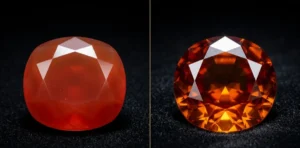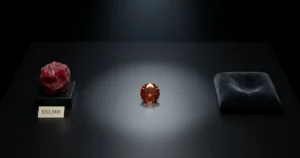
This complete kyawthuite NHM Los Angeles Visitor Guide tells you exactly where it is, how to find it, and how to make the most of your visit. This is exactly one place on Earth where you can see the world’s only kyawthuite specimen with your own eyes, the Natural History Museum of Los Angeles County.
Table of Contents
Introduction kyawthuite NHM Los Angeles Visitor Guide
Where is kyawthuite found today? Not in the ground, and not in any private collection, the world’s only specimen of kyawthuite has been in the custody of the Natural History Museum of Los Angeles County (NHM) since it completed its journey from Myanmar’s Mogok valley through the hands of scientists and into institutional preservation. For anyone who has become captivated by the story of the world’s rarest mineral, a visit to the NHM is the only option. There is no other destination. There is no second institution that has a sample. You cannot see kyawthuite in London, Paris, New York, or Tokyo. You can only see it in Los Angeles, and remarkably, you can see it on a standard museum admission ticket.
About the Natural History Museum of Los Angeles County
The Natural History Museum of Los Angeles County, commonly abbreviated as NHM or NHMLAC, is one of the largest natural history museums in the United States, founded in 1913 and home to more than 35 million specimens and artifacts across scientific and cultural collections. Its campus occupies a historic 1913 Beaux Arts building in Exposition Park, a cultural campus in South Los Angeles that also includes the California Science Center, the California African American Museum, and (adjacent via tunnel) the University of Southern California. The NHM‘s scientific collections span paleontology, anthropology, botany, entomology, herpetology, ichthyology, mammalogy, mineralogy, and ornithology, making it one of the most comprehensive natural science repositories in the Western Hemisphere.
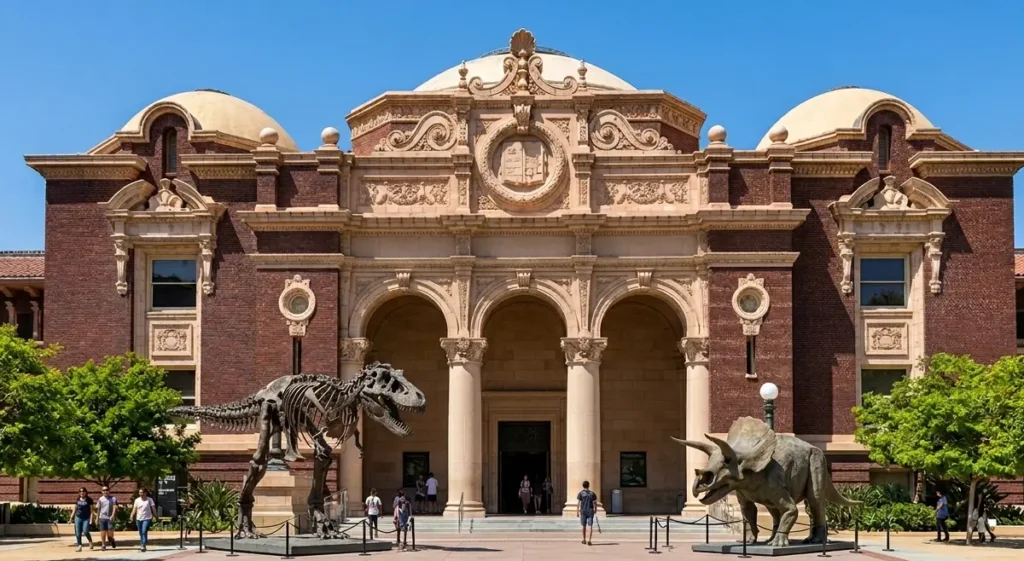
The museum’s Gem and Mineral Hall is among the finest in the United States, ranking alongside comparable halls at the Smithsonian (Washington D.C.), the American Museum of Natural History (New York), and the Natural History Museum London. The NHM Gem and Mineral Hall features exceptional specimens of gem crystals, rare minerals, gold specimens, meteorites, and precious stones from around the world including its crown jewel, the only known specimen of kyawthuite.
NHM Los Angeles — Visitor Information
Full Name: Natural History Museum of Los Angeles County
Address: 900 Exposition Blvd, Los Angeles, CA 90007
Neighborhood: Exposition Park, South Los Angeles
Metro Access: Expo Line, Expo Park/USC Station (E Line)
Parking Exposition: Park structure, paid parking available
General Hours: Typically Tue–Sun, 9am–5pm (verify at nhmlac.org)
Kyawthuite Location: Gem and Mineral Hall
Official Website: nhmlac.org
Photography: Personal photography generally permitted (no flash required for minerals)
Accessibility: Fully wheelchair accessible
Where Exactly Is Kyawthuite in the Museum?
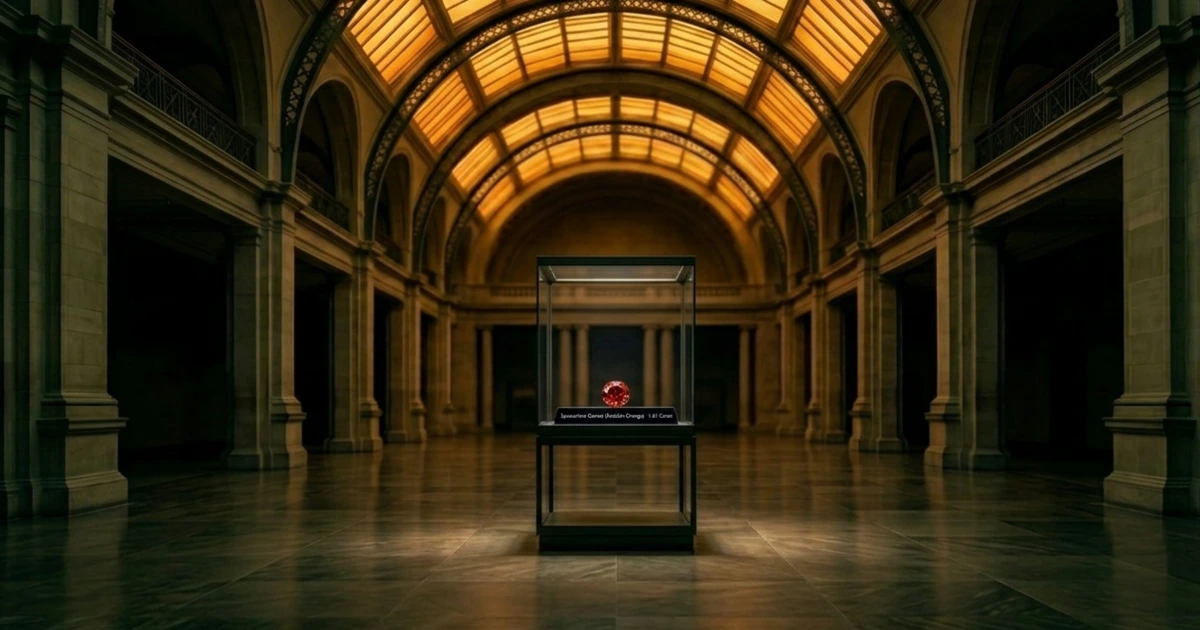
The kyawthuite specimen is displayed within the Gem and Mineral Hall. Given the stone’s small size, 5.8 × 4.58 × 3 millimeters, weighing just 1.61 carats, it is housed in a display case alongside other rare and scientifically significant minerals, typically with an accompanying label that clearly identifies it as the world’s rarest mineral. Because it is the only specimen of its kind on Earth, museum curators treat it with corresponding significance in terms of display context and labeling. However, its physical smallness means it can be easy to walk past without pausing if you are not specifically looking for it. Knowing to look carefully, and knowing what the label says, is the most important preparation a visitor can make.
The NHM‘s Gem and Mineral Hall is a permanent collection space, meaning kyawthuite is on display as a core part of the permanent collection rather than as a temporary exhibition. This makes scheduling your visit relatively flexible, the stone is not on loan elsewhere or rotating in and out of storage (though verifying current display status before any special trip is always prudent).
What to Expect When You See It
Visitors who come to see kyawthuite with expectations shaped by the dramatic language used to describe it , “priceless,” “the only one on Earth,” “rarest mineral in the world“, may experience a moment of cognitive recalibration when they first set eyes on it. The stone is small. It does not fill a case. It does not glow with an otherworldly light or rest on a velvet pedestal under a museum spotlight (though the lighting in gem mineral halls is generally excellent). It is a small, amber-orange, translucent grain, beautiful in a jewel-like way, if you know what you are looking at, but not immediately dramatic to an unprepared eye.
The experience of seeing kyawthuite is, therefore, one that rewards context rather than spectacle. When you know that this stone is the only piece of its kind anywhere on Earth, that the geological conditions that produced it have, to all available evidence, occurred exactly once in 4.5 billion years of planetary history, the smallness becomes the point. You are looking at the entirety of something. Not the finest example, or the largest piece, or the most beautiful specimen of a mineral type. The whole thing. All of it. That recognition changes the quality of the observation entirely.
“You expect something monumental. What you find is a small amber grain behind glass. Then you understand: its significance lives in your knowledge of what it is, not in what it shows you. That is a more sophisticated kind of wonder.”
Five Step Guide to Maximizing Your Kyawthuite Visit
Arrive Early on a Weekday
The NHM’s Gem and Mineral Hall can become crowded on weekend afternoons. Arriving at opening time on a Tuesday or Wednesday gives you the hall nearly to yourself, allowing unhurried viewing and photography of the kyawthuite specimen and surrounding displays without navigating around tour groups or school visits.
Bring Macro Photography Equipment
At 5.8 mm in its longest dimension, kyawthuite is tiny. A smartphone with a macro mode or clip-on macro lens can capture the stone’s amber translucency and adamantine luster in impressive detail. The NHM’s case lighting is generally favorable for mineral photography. A small tripod or stabilizer improves results significantly.
Read All Accompanying Labels Carefully
The NHM curates mineral displays with contextual information about chemical composition, geological origin, and scientific significance. The labels near kyawthuite provide the scientific framework needed to appreciate the specimen fully. Don’t rush through them, they are a mini-education in mineralogy condensed to one display.
Explore the Full Gem Hall
The NHM’s collection includes painite (the world’s second-rarest mineral), benitoite (California’s state gem), extraordinary tourmaline crystals, gold specimens, meteorites, and gems from Myanmar that contextualise kyawthuite’s geological origin. Treating the kyawthuite visit as a node in a broader mineral exploration visit maximises the experience.
Check for Curator Programs
The NHM periodically runs public science programs, curator talks, and special guided tours. These can include mineralogy-focused content and occasionally provide direct access to scientific staff who work with the collections. A curator-led tour of the Gem Hall is the closest most visitors will come to an expert discussion of kyawthuite in a live setting.
Nearby Attractions for Geology Enthusiasts
The NHM sits within Exposition Park, which also houses the California Science Center, home to the Space Shuttle Endeavour, making it a remarkable dual destination for science enthusiasts. For serious geology and mineral collectors visiting Los Angeles specifically for kyawthuite, the broader Southern California region offers additional mineralogical interest: the Caltech mineral database maintained by Dr. George Rossman (who has studied both kyawthuite and painite extensively) is at the California Institute of Technology in Pasadena, approximately 15 miles northeast. The Gemological Institute of America (GIA) maintains a campus in Carlsbad, about 90 miles south of Los Angeles.
Visitors Note
Museum display configurations can change. Always confirm that the kyawthuite specimen is currently on public display before planning a special trip. A brief email or call to the NHM collections department can provide current display status. The museum’s official website (nhmlac.org) is the best source for current hours, admission pricing, and exhibition schedules.
NHM Visitor FAQs
Where is kyawthuite kept?
Kyawthuite is kept at the Natural History Museum of Los Angeles County (NHM), located at 900 Exposition Blvd, Los Angeles, CA 90007. It is displayed in the museum’s Gem and Mineral Hall as part of the permanent collection. This is the only location in the world where the specimen can be seen.
Can you buy a ticket to see kyawthuite?
Yes, a standard NHM Los Angeles general admission ticket grants access to the Gem and Mineral Hall where kyawthuite is displayed. No special pass or advance reservation is required specifically for the kyawthuite specimen. Ticket prices and hours can be confirmed at nhmlac.org.
How small is the kyawthuite specimen?
The kyawthuite specimen measures 5.8 × 4.58 × 3 millimeters and weighs 1.61 carats (0.3 grams). It is smaller than a typical shirt button. Visitors should bring a smartphone camera with macro capability to appreciate its detail up close.